
Canoe & Kayak
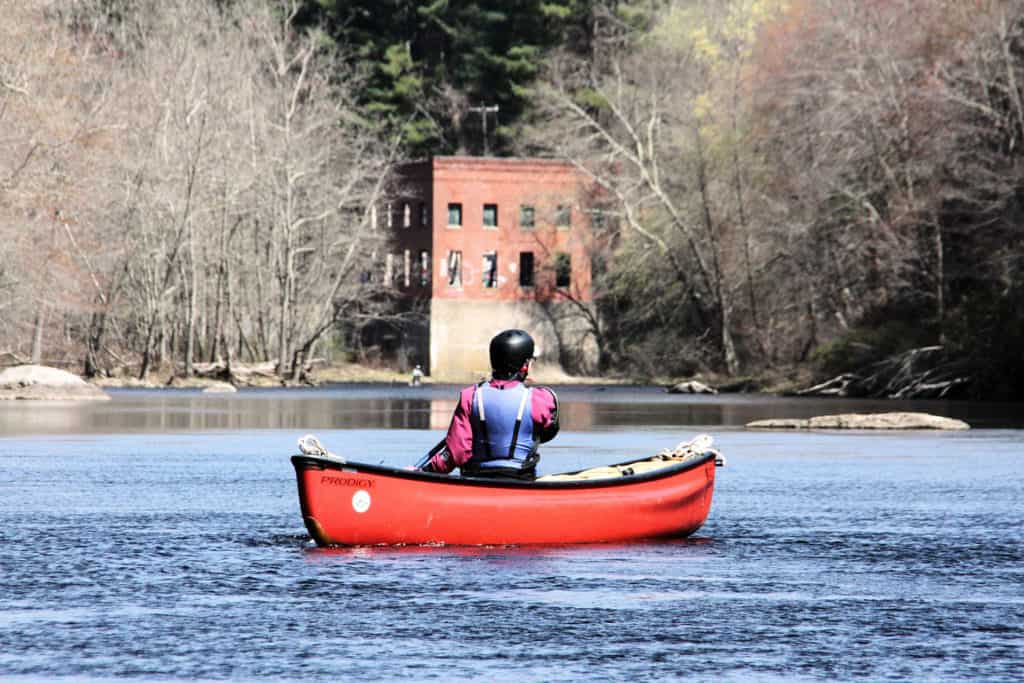
Welcome! The Canoe Kayak Committee (CKC) of the Appalachian Mountain Club’s New York-North Jersey Chapter offers a wide variety of paddling trips most weekends throughout the year. We paddle on quiet water, whitewater, and sea kayak trips ranging from one day to one week. Many of our trips are in the New York-North Jersey area, but we travel from Canada to Georgia looking for fun paddling opportunities. Check out AMC’s Outdoors Connector to learn about upcoming events.
Getting started with canoeing and kayaking
Benefits we offer include:
- Over one hundred trips a year
- Boats available to rent to trip participants at a nominal fee
- Canoe and kayak instruction courses
- Safety and rescue classes (safe paddling = fun paddling)
- Great fun!
The AMC has been a leader in paddle sports for almost 100 years. We invite you to join us on a trip to experience our region’s beauty and diverse waterways. The CKC welcomes paddlers of all abilities, from beginners to experienced boaters. Learn more about how the CKC runs its canoe and kayak program below. Contact the Committee Chair at canoekayak@amc-ny.org or the appropriate trip leader if you have additional questions.
FAQ
Q: What kinds of paddling trips does the New York-North Jersey Chapter offer?
The New York-North Jersey Chapter offers trips covering many paddling disciplines, including whitewater kayaking, sea kayaking, and different kinds of canoeing. Our trips range from gentle rivers in the New Jersey Pine Barrens to challenging whitewater, from placid lakes to rough ocean surf. Some of our trips are day trips; others are weekend trips with car camping at a convenient campsite. Many weekend trips feature community cooking while others take advantage of inexpensive restaurants. One or two trips a year are expeditions in which we carry all our gear in the boats and camp overnight on the river bank. Trips are listed in AMC’s Outdoors Connector.
Q: Do I need my own boat to paddle with the Chapter?
No, you don’t need to own a boat to paddle with the AMC. We own several fleets of boats that are available for rent on scheduled trips and instructionals. Our rental rates are nominal. Boat rentals generally need to be picked up and returned to our Barn in Rockland County, NY. Gear such as personal flotation devices (PFDs), paddles, spray skirts, and helmets are included in the boat rental costs. Here’s how to get to the Barn.
Q: Does the Chapter offer canoe and kayak instruction?
Yes, our instructional program includes beginner and intermediate-level kayak and canoe courses. Find out more about these courses by contacting canoekayak@amc-ny.org. Be aware our instructional programs are very popular and fill up quickly.
Q: Who are the trip leaders for the CKC, and what do they do?
All CKC trip leaders are AMC members who volunteer their time and skills to share their love of paddle sports. AMC paddling trips are not catered affairs: you are expected to share the loading, unloading, camping, and cooking chores that make our trips successful and inexpensive.
Q: I would like to go on whitewater trips. What sort of training do I need?
The CKC provides a range of training classes and works with paddlers to help them earn ratings from quiet water to Class IV whitewater. Learn about the rating system here.
Q: How do I register for canoeing and kayaking trips?
Paddling trips are listed in the Outdoors Connector. To register, simply click on the “REGISTER NOW” button and answer the questions on the form. Registration usually closes about a week before the trip, although instructional classes often require registration farther in advance. Many classes and some trips limit the number of participants and often fill quickly so it is important that you register early.
See the Trip and Paddler Ratings section for more details on the skills required to participate in trips in different types of water. Also, trip leaders have final responsibility for deciding if the trip is appropriate for the registrant.
Q: Can children come on canoe and kayaking trips?
Children (under 18) are usually welcome on our paddling trips, but a parent or legal guardian must sign the AMC’s Assumption of Risk. Another adult (aunt, sibling, family friend, etc.) may NOT sign the waiver on behalf of the parent. In general, we expect the parent or legal guardian to accompany the child on the trip. At the trip leader’s discretion, the parent/guardian may designate another responsible adult to accompany the child. In this case, the parent or guardian must sign the waiver and give it to the adult who will accompany the child, to be given to the trip leader. If the minor child is old enough to write, the child must also sign the waiver.
Note: In order to comply with Pennsylvania Youth Protection Laws, all children under 18 years of age must be accompanied by their parent or legal guardian for all trips taking place in Pennsylvania.
As with all participants, children must wear a properly-fitted life vest on the water. The CKC has a few life vests for larger children; check with the trip leader to see if they are available. For small children, you may need to supply your own. Children under 12 who are passengers rather than serious paddlers are not charged the boat rental fee.
Q: How much do canoe and kayaking trips cost?
Paddling Fees: Paddling trips are free for those who have their own canoes or kayaks. For overnight trips, participants may be charged for their share of campground fees, food, firewood, etc.
Boat Rental Fees: $20 for the first day of paddling; $10 for each additional day. The fee is per boat. Find out how to rent boats from CKC.
Rental fees are charged for the use of CKC canoes and kayaks. This money is used to repair and replace the boats, paddles, life jackets, and other boating equipment and pay the rent for The Barn where we store our boats.
Additional fees: You may also be assessed a miscellaneous fee to reimburse the trip leaders for their expenses incurred associated with leading the trip (e.g. firewood, ice, propane, etc.). The total costs for food and camping are shared by all those who camp and dine with the group. If you follow a special diet and choose not to eat with the group, please inform the leader prior to the trip.
Q: What is the Canoe & Kayak Committee’s safety policy?
The AMC has been at the forefront of safe paddling for decades, but no one can guarantee your safety. There are always hazards in paddling — not just in whitewater or open ocean but even on quiet streams and lakes. By paddling with the AMC, you assume this risk for yourself and your gear, both on and off the water. If you have questions about the hazards in paddling, it is your responsibility to inform yourself by asking questions of trip leaders and/or researching other sources of information, such as the American Canoe Association. You alone must decide when, where, and how to paddle. On all paddling trips, you must sign the AMC’s Assumption of Risk before participating.
The New York-North Jersey Chapter’s Canoe & Kayak Committee has adopted the following policies to help promote safety on our paddling trips.
Life Vests/Personal Flotation Devices (PFDs)
During all activities conducted by the Canoe & Kayak Committee, a properly fitting and fully zippered life vest must be always worn while on the water, regardless of the type of boat or the difficulty of the water. The zippered life vest must be Coast Guard-approved type III or V.
Helmets
Helmets are required for all paddlers, including canoeists on Class II and higher rivers. Those paddling closed boats (kayaks, C-1s, C-2s) must wear helmets on Class I and above whitewater trips. Sea, touring, and recreational kayakers are required to wear helmets on all TW4 trips (e.g., surf, rough water), on all TW3 trips (which there will be exposure to breaking waves exceeding one foot in shallow water, e.g., moderate or challenging surf launches or landings), and on all other activities in which there will be continuous exposure to rocky shorelines or bottoms or other similar hazards (e.g., pilings, sea walls, etc.). The trip leader or on-water leader may require the use of helmets in other circumstances if the conditions, in the leader’s opinion, warrant their use.
Wet Exits
Regardless of water temperature, trip leaders are advised to request closed boaters of unknown ability who use a spray skirt to demonstrate a wet exit or other self-rescue skill before participating on an AMC trip.
Q: What information will I receive once I’ve registered for canoe and kayaking trips?
Dope Sheet: Approximately a week before the trip, the leader will email a “Dope Sheet” to each participant. If you do not have email, please arrange an alternative way to receive the information with the trip leader. The Dope Sheet contains very important information, including: location of the meeting place, boat rental information, waterway information, and other information needed to attend the trip.
Meeting Place and Time: Please be on time to the meeting place specified in the dope sheet. Leaders are not required to wait for latecomers. If you arrive at the meeting place just as the group is ready to get on the water, the leader has discretion as to whether you can paddle with the group. Should you experience car problems or other unavoidable delays on the way to the meeting place, please contact the leader.
At the meeting place, seek out the leader and introduce yourself. The trip leader will generally collect any fees at this time.
Shuttle: On many paddling trips, after everyone has arrived at the meeting place (usually the launch site or “put-in”) and unloaded their gear, vehicles must be driven (shuttled) from the put-in to the landing site or “take-out.” Only drivers go on the shuttle. Once on the road, keep up with the car in front of you and always keep the car behind you in sight. If the car behind you stops, you must also stop and flash your headlights or do something to catch the attention of the car in front of you. Eventually, all will stop — until all vehicles in the shuttle are together again. At the take-out, park and lock your car, remember to take the key, and then squeeze into one of the vehicles designated to return to the put-in. When the shuttle returns, the group should be ready to get on the water. After the run, please volunteer to take the shuttle drivers to the put-in to get their vehicles.
Q: What if it rains? Will the trip be canceled, or will a rain date be scheduled?
Generally, we do not cancel paddling trips due to bad weather, but trip plans may be altered by changing water levels and the weather that may create paddling hazards. Also, remember that while it may be raining in one location, the sun may be shining at your paddling destination! Paddling is a water sport. Plan to get wet.